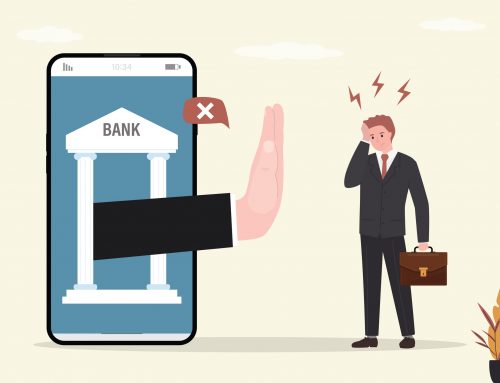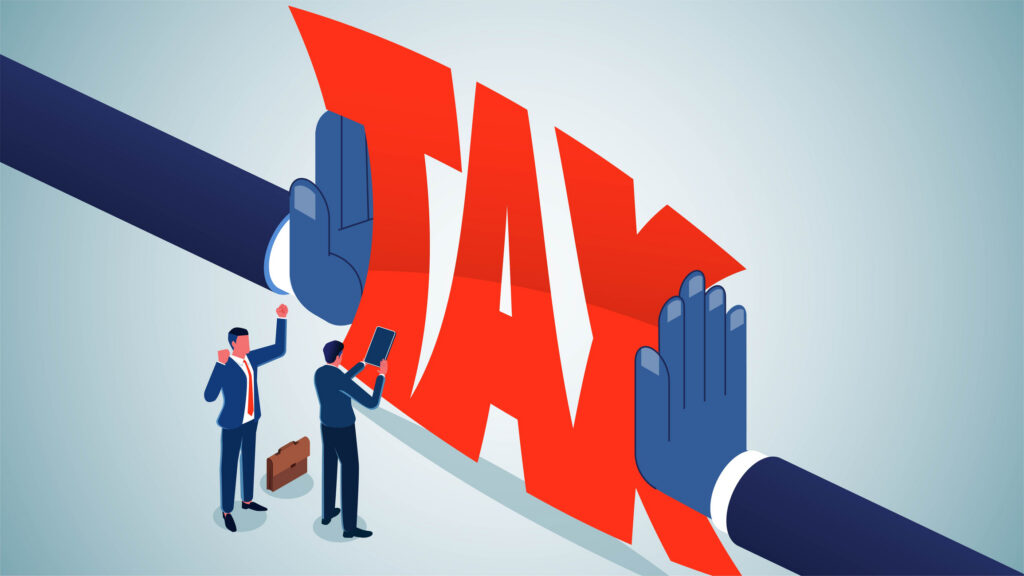
For the global citizen, the friction of borders has historically been defined by exchange rates, wire fees, and the occasional compliance headache. We move money across oceans with the same nonchalance that we move across time zones. However, as of January 1, 2026, the legislative landscape has shifted. The United States has introduced a first-of-its-kind federal excise tax on certain international money transfers. This move marks a fundamental change in how the government views and monitors the flow of private capital.
If you are an expatriate sending money home or an international investor funding offshore obligations, the method by which you fund your transfers now carries a price tag. This is the beginning of what we call “The 1% Squeeze.”
While this provision focuses on remittance transfers, it is part of a broader set of changes affecting Americans abroad. See our partner MyExpatTaxes’ guide, ‘Trump’s Big Beautiful Bill Passed: What US Expats Need to Know,’ for a full overview.
The OBBBA Mandate: A New Chapter in the Tax Code
The genesis of this shift lies within the One Big Beautiful Bill Act (OBBBA), a sweeping piece of legislation designed to modernize revenue collection and tighten oversight on cross-border liquidity. Tucked within this act is the creation of Internal Revenue Code (IRC) Section 4475, which imposes a 1% federal excise tax on remittance transfers.
On the surface, 1% may seem like a nominal administrative fee. However, in the context of federal taxation, it represents a landmark departure. For the first time, the U.S. government is taxing the act of moving money, rather than the income that generated it. This is not an income tax; it is an excise tax on the transition of wealth from the domestic sphere to the international one.
The legal intent behind Section 4475 is clear: the targeting of non-traceable money flows. Washington is increasingly concerned with the movement of funds that bypass the traditional, fully transparent digital banking system. By placing a premium on transfers that lack a clear digital paper trail, the OBBBA is effectively incentivizing a migration toward 100% bank-integrated financial activity.
The Cash vs. Digital Divide: Defining the Taxable Event
The most critical aspect of the new law is the distinction between how a transfer is funded. The tax does not apply to every dollar that leaves the country; instead, it targets the funding vehicle. This creates a bifurcation in the market that every expat must understand:
- The Taxable Category: The 1% tax applies to transfers funded by cash, money orders, or cashier’s checks. If you walk into a storefront with a stack of bills to send money to a family member or a contractor abroad, the provider is now legally obligated to shave 1% off the top for the IRS.
- The Exempt Category: Bank-to-bank transfers and transfers funded via digital accounts (where the source of funds is already within the regulated banking system) are currently exempt.
This creates a digital divide where the government is essentially offering a discount for traceability. If the IRS can see where the money came from via a digital ledger, they waive the fee. If the money enters the remittance stream as anonymous cash, the 1% tax acts as a transparency premium.
The New Reporting Chain: Providers as Tax Collectors
For the expat, the most immediate change won’t be a bill from the IRS but a change in the terms of service from their remittance provider. Under the OBBBA, the burden of collection and reporting has been shifted to the private sector.
Money Transfer Operators (MTOs)—ranging from traditional giants like Western Union to modern fintech platforms like Wise—are now required to act as de facto tax collectors. These entities must report these transactions quarterly via an updated Form 720 (Quarterly Federal Excise Tax Return).
This means that every time a taxable remittance is made, the individual’s data and the transaction details are being fed directly into a federal reporting system. The oversight on cross-border liquidity has never been more focused. For the user, this means that even a small cash transfer now creates a permanent record in the federal excise tax database.
The Expat Impact: Why This Could Move the Needle
Why does a 1% tax matter so much to a high-net-worth expat? This is less about the $100 lost on a $10,000 transfer and more about the decrease in privacy regarding your cross-border liquidity.
Historically, many expats used cash-funded transfers for convenience or to maintain a level of financial privacy. Under the new regime, privacy comes with a tax and a digital trail.
By monitoring remittances via Form 720, the IRS gains a new lens through which to view your financial life. If you are remitting significant sums but your reported income on Form 1040 doesn’t seem to support those outflows, the remittance tax database becomes a primary source for audit triggers. The 1% Squeeze is as much about data as it is about dollars.
Potential Strategies: Navigating the New Landscape
In this new environment, business as usual is a risk. Navigating the new reality requires a proactive audit of your global banking structure.
- Transitioning to Account-to-Account Rails
The most obvious strategy is to eliminate cash-funded transfers entirely. However, this is more complex than it sounds for expats living in cash-heavy economies. You are responsible for making sure your transfer funding source meets the strict digital exemption criteria. This means auditing your transfer platforms to confirm they are pulling directly from a verified bank account rather than a pre-paid card or a cash-loaded digital wallet. Transitioning your global transfers to Account-to-Account (A2A) rails is now a matter of tax efficiency.
- Documentation of Non-Income Transfers
Even for exempt digital transfers, the increased scrutiny on remittance means you must be prepared to defend the nature of the transfer. Large digital movements, while exempt from the 1% excise tax, are more likely to trigger income flags within the IRS’s automated systems.
That’s why it’s so important to maintain up-to-date records that prove a transfer was a gift, a capital movement between your own accounts, or the repayment of a loan rather than taxable foreign income. If the IRS sees $100,000 moving to an overseas account, they may assume it is unreported income unless you have the paper trail to prove otherwise.
- Understanding the Risks of Structuring
The OBBBA also includes robust anti-conduit rules. Some may be tempted to break a large cash transfer into several smaller ones to avoid detection or to stay under certain internal reporting thresholds of the MTOs. To address that, the IRS uses sophisticated algorithms to identify patterns of conduct. Attempting to structure transfers to avoid the 1% tax is a federal offense and can lead to penalties that far exceed the original tax amount, including potential criminal charges.
The Path Forward: A Digital-First World
The introduction of IRC Section 4475 is a clear signal that the era of off-the-grid international finance is coming to a close. The U.S. government is leveraging the tax code to force transparency in attempts to make sure that every dollar crossing the border leaves a digital footprint.
For internationalists, the goal is no longer just about avoiding double taxation; managing your financial transparency profile is now an important piece of your overall financial security. Every transfer you make is now a data point. At Beacon Global Advisors, we believe making sure those data points tell a coherent, compliant story is important for maintaining your financial freedom abroad.
The 1% Squeeze is a reminder that in the world of modern tax compliance, the method of movement is just as important as the destination.
Are your global money movements being flagged by the new 1% excise tax?
Let Beacon Global Advisors optimize your cross-border banking structure for a digital-first world of modern tax compliance. Reach out to us today!
https://www.expatustax.com/what-is-the-one-big-beautiful-bill-act/
https://www.taxesforexpats.com/articles/expat-tax-rules/remittance-tax.html
Disclaimer: Some of the content of this communication was provided by third parties of Beacon Global Advisors. We have not verified the information contained herein, but we believe the content is reliable. None of this content should be construed as legal, accounting or tax advice. Many legal issues, accounting or tax regulations are complex and often have highly-individualized requirements, you should seek the advice of a competent professional if you have specific tax questions. Links provided in this content will take the reader to website content that is not reviewed or approved by Beacon Global Advisors.